
By Dr Natasha Montesalvo, Principal Consultant – Destinations, Strategy & Insights at EarthCheck
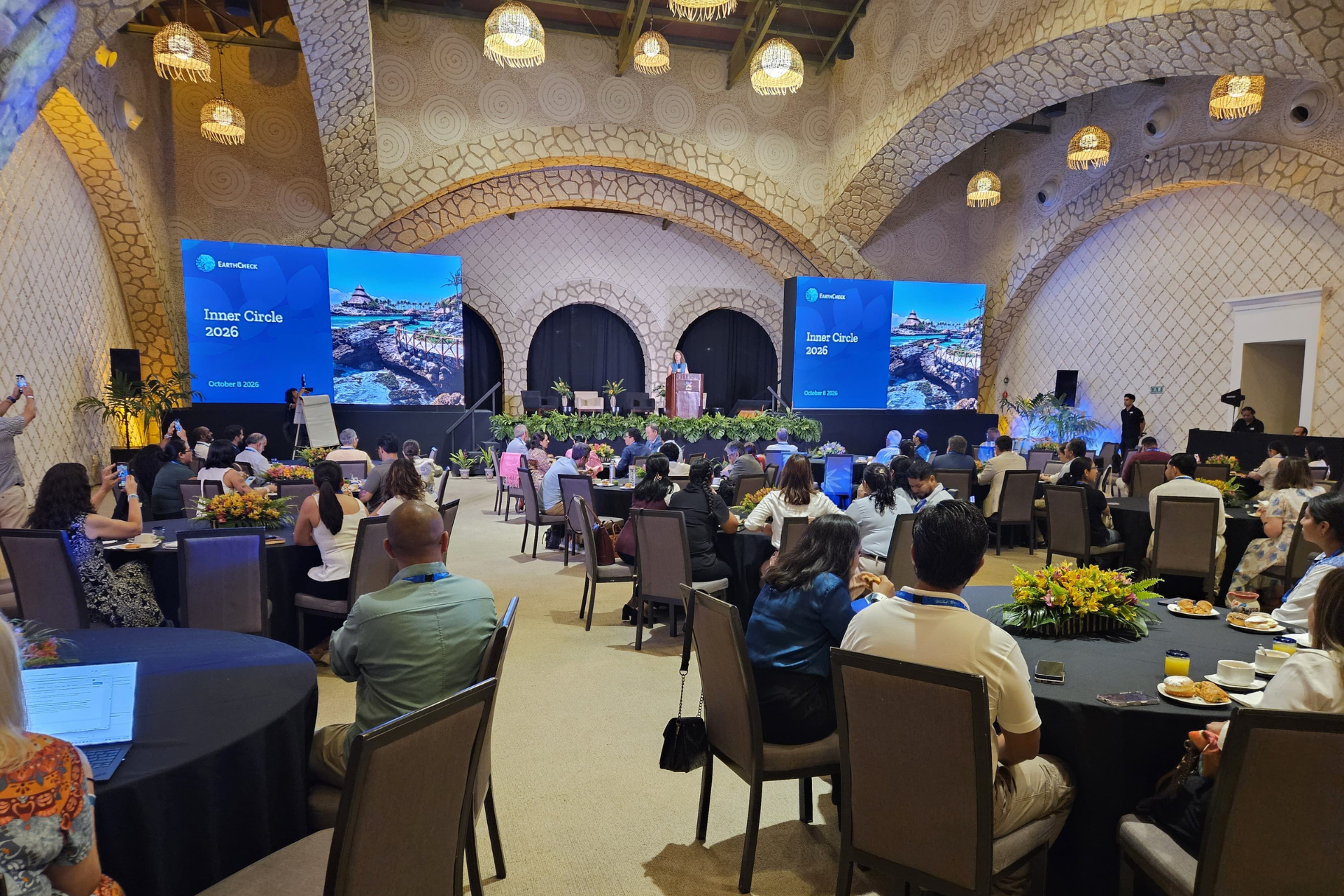
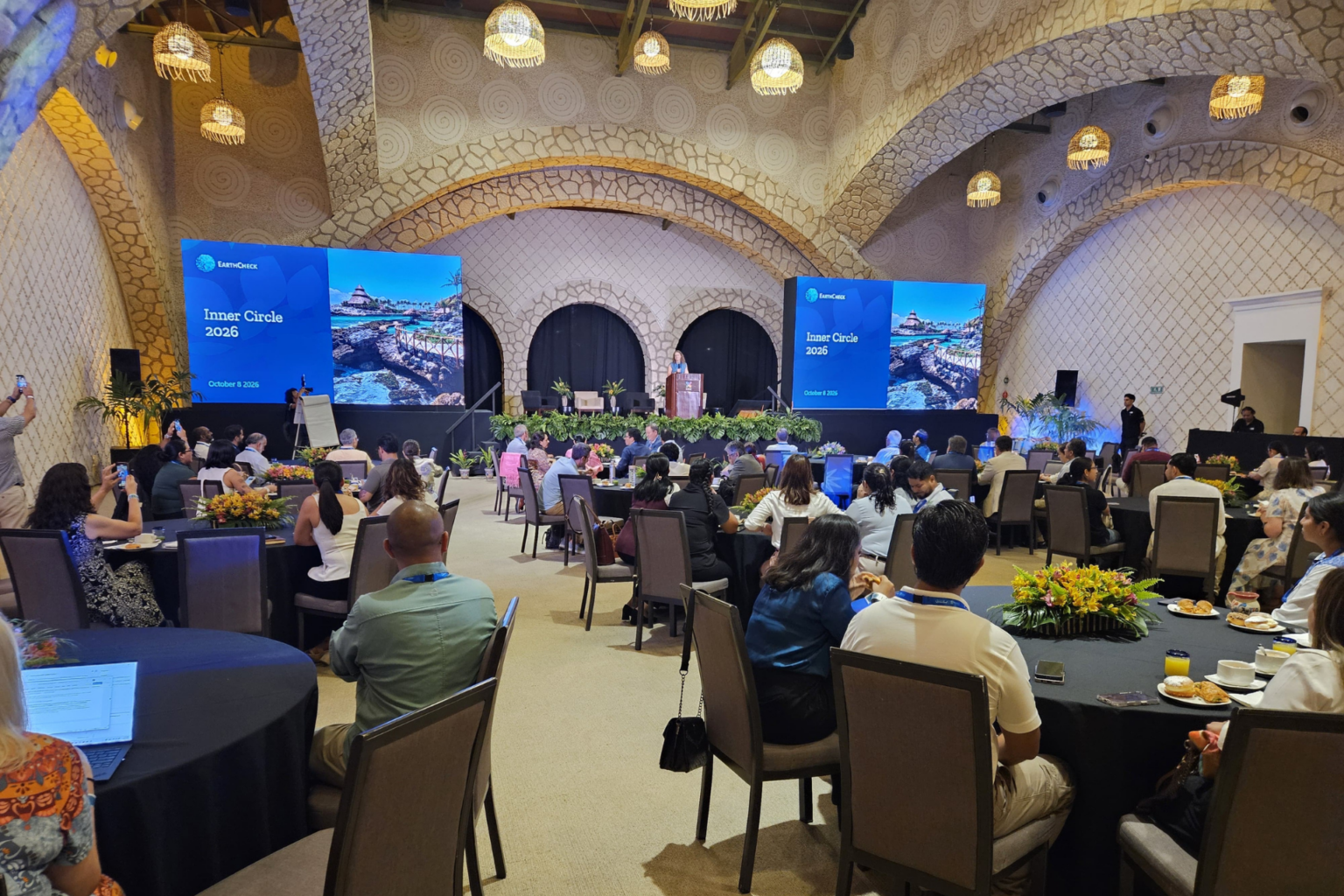
Hosted by Grupo Xcaret in the Riviera Maya, the Forum brought together more than 125 tourism leaders, clients, government representatives, researchers and industry partners to explore the challenges and opportunities shaping tourism’s future. The program included expert presentations from various industries, three interactive panels and a client-only roundtable discussion to address immediate challenges and brainstorm solutions.
EarthCheck has worked closely with Mexico’s tourism industry for the past 23 years, and the impact of that work, along with the dedication of local operators and government, was evident throughout the event.
This year’s program explored how tourism can deliver greater value for businesses, communities and the environment. It challenged participants to rethink destination success, examine shared responsibilities and consider the actions needed today to shape tourism through to 2050 and beyond.
The event aligned with Mexico’s 2030 tourism strategy, which aims to position the country as a global leader in sustainable tourism through innovation, diversification and an inclusive, competitive development model. The strategy calls for equitable economic growth that respects and benefits local cultures and communities while using natural resources responsibly.
However, the purpose of Inner Circle was to go beyond these established ambitions, challenging conventional approaches to destination and sustainability management and exploring new ways to realise tourism’s regenerative potential.
Building a shared vision for sustainable destinations
Fabiana Briseño, the Secretaría de Turismo Playa del Carmen, opened the event with a welcome that reinforced the importance of local government involvement. For communities where tourism is a priority industry, collaboration between government, businesses and residents is essential to manage growth and share benefits.
Andrés Aguilar Becerril, subsecretario de la Secretaría de Turismo de Quintana Roo, outlined the state’s vision and strategy for 2050 and its commitment to becoming a regenerative and responsible tourism destination, where success is measured by the wellbeing of both people and ecosystems.
As the EarthCheck Research Institute noted in its Regenerative Tourism paper, you cannot have a regenerative tourism system if you don’t already have the foundations of a sustainable tourism sector in place. Moving towards regeneration means building the systems, capabilities and partnerships necessary to manage resources responsibly, support communities authentically and demonstrate continuous improvement.
Achieving this ambition requires collective action across a destination, with operators of all sizes contributing to a shared direction.
Quintana Roo’s presentation showed that defining a sustainable tourism vision is only the first step. Delivering it requires governance, investment and measurement systems. Different destinations require different responses. Some need renewal and diversification, while others need clearer development limits, investment in infrastructure or stronger community participation. This place-based approach recognises that tourism growth cannot be managed independently of the ecosystems, infrastructure, traditions and communities that sustain it.
Understanding the traveller of the future
Oliver Martin, Senior Partner at Skift, challenged the audience to look more closely at why consumers travel, and who is ready to pay for purpose.
Drawing on Skift research, he highlighted that one in four travellers actively seek sustainable travel options and are willing to make trade-offs to access them. He asked how destinations can shift from wanting to please everyone to actively building demand among the market segments that align with their values, a question that challenges traditional approaches to destination management and marketing.
A significant commercial insight was that sustainability should not be approached solely as a compliance obligation or operating cost. Skift’s research demonstrates that there are identifiable traveller segments who actively value cultural connection, environmental responsibility and meaningful experiences.
For Mexico, the opportunity is to translate these preferences into differentiated products that attract higher-value visitors, encourage longer stays and distribute economic benefits more widely. The competitive advantage lies in designing experiences that meet these expectations, with sustainability credentials as supporting evidence.
From growth to good: Redefining destination success
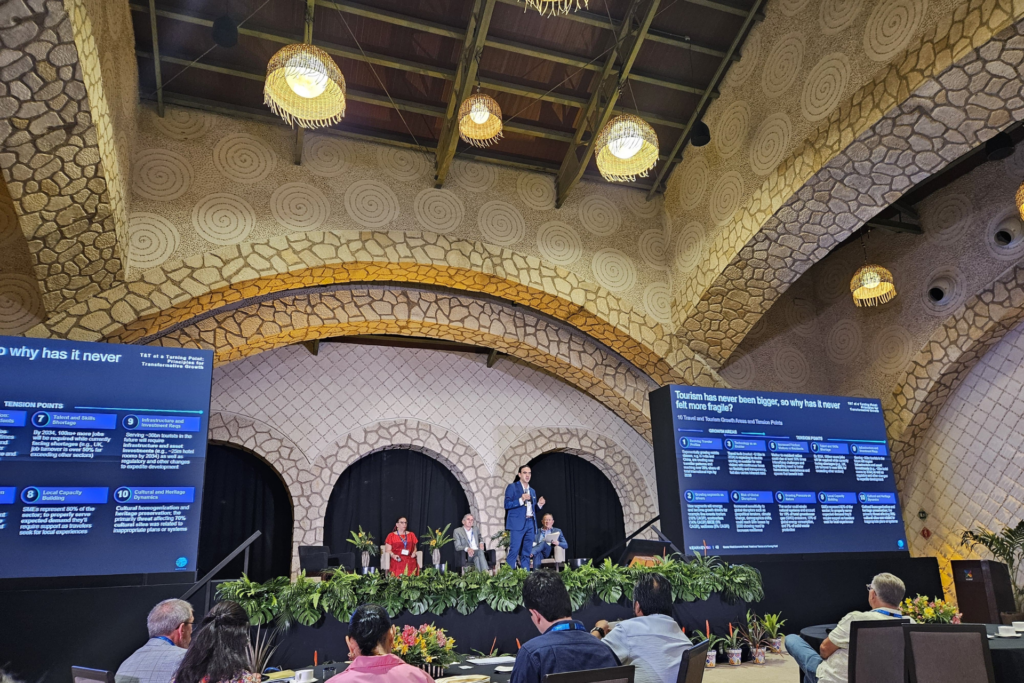
In the first panel of the Forum, Oscar Márquez from Kearney Mexico acknowledged that growth measures are likely to remain the standard for the foreseeable future, while explaining why they need to evolve. Visitor numbers, guest nights and expenditure remain useful, but a fuller picture should include, at a minimum, local economic benefit, community wellbeing, cultural participation and environmental performance.
Iliana Rodriguez, Chief Sustainability and Institutional Dialogue Officer at Grupo Xcaret, brought this discussion to life through the organisation’s work with communities and Mayan culture. Her examples illustrated both the importance of this work and the challenge of measuring its value.
“How do you measure the value of handicrafts?” she asked. Is it just the amount sold, the number of people who attend a fair, or the skills that are passed down to future generations?
To wrap up the panel, Professor Daniel Gschwind of Griffith University explored the challenges of a ‘growth for growth’s sake’ mindset and its implications for social licence, community satisfaction and the broader tourism model. His message was direct: ask communities what they actually want, listen carefully, and allow their priorities to influence decisions.
Shared stage, shared responsibility: Leadership in sustainable events
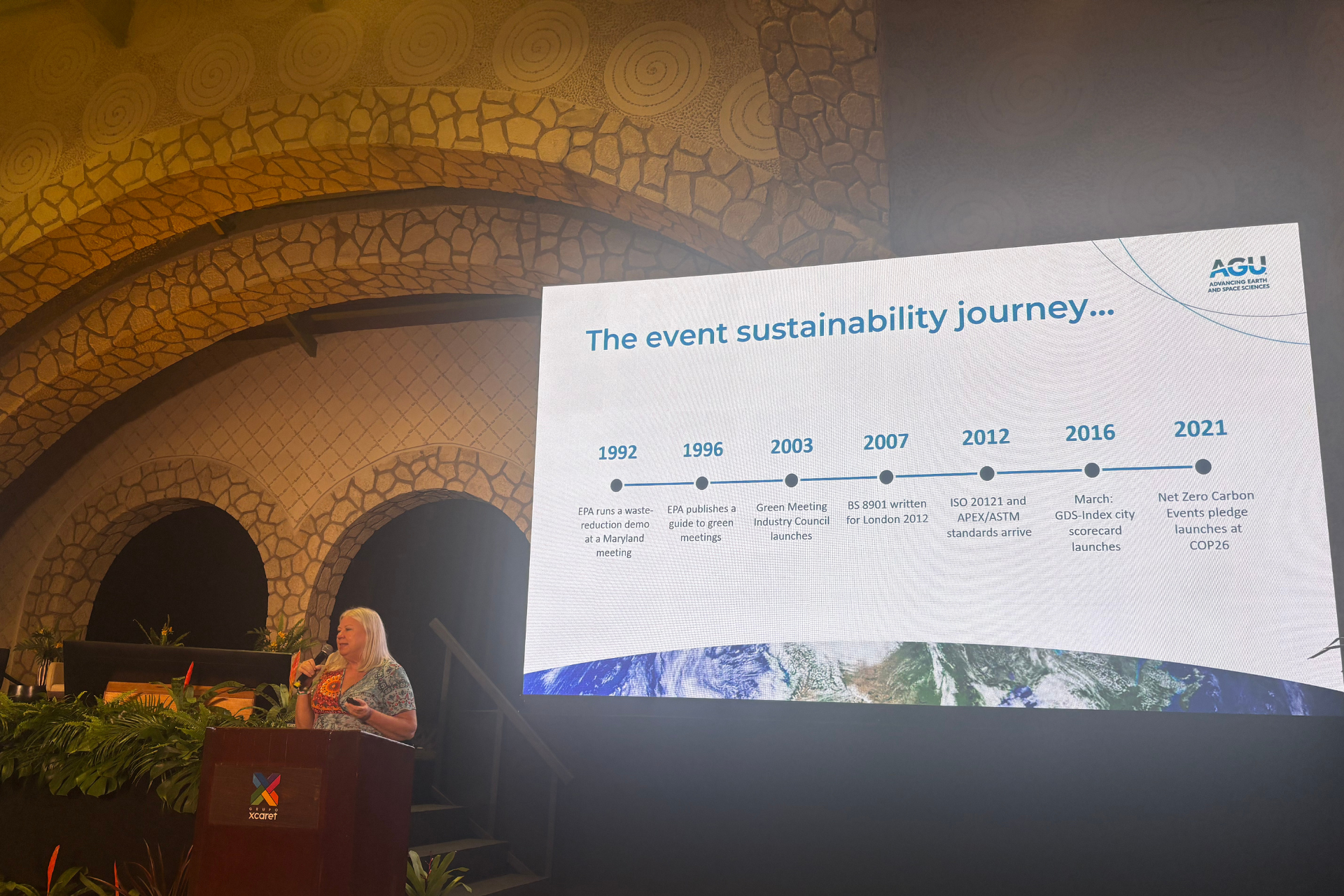
The second panel explored sustainability through the lens of meetings and events, with lessons relevant across the entire tourism supply chain.
Vicki Hawarden from the American Geophysical Union, an association that hosts events attracting up to 30,000 attendees, highlighted the influence that event buyers can have on industry standards.
While responsibility for energy, water, waste, social impact and regeneration does not rest solely with buyers, their purchasing decisions can encourage venues and suppliers to improve their practices.
Aline Zamora of Vidanta Riviera Maya illustrated how environmental protection and active land regeneration can shape decisions at the venue level. During turtle nesting season, for example, she explained how event arrangements and tourism must respect the ecological needs of the location. Communicating these requirements early and setting clear boundaries and procedures helps organisers understand expectations and results in better events.
Michelle Talavera Herrera explained how El Centro Expositor y de Convenciones de Puebla, a publicly funded convention centre, prioritises positive social and environmental impact through non-negotiable systems and venue procedures. She described the benefits of rigorous EarthCheck audits, including how a non-conformity during a recent audit led to new procedures that have significantly improved recycling and reduced waste sent to landfill. These processes carry an initial cost, but prioritising sustainability has set the centre apart as a leader in its field and delivered tangible community benefits.
Representing a policy perspective, Eric Fins from Grove Climate Group highlighted the role of government in enabling the sustainable transition, while also explaining how individual operators can step in to fill gaps left by political instability. A balance is needed between the roles played by public and private stakeholders, and effective collaboration needs clear priorities, regular communication and reporting that better supports taking action.
Taken together, the panel’s contributions highlighted the importance of ensuring shared responsibility does not become diluted accountability. Event buyers can establish expectations through procurement requirements, while venues and suppliers are responsible for putting those expectations into practice. Governments also have a role to play in creating the conditions for progress, supported by effective collaboration with the private sector. Meaningful change depends on clear responsibilities, informed decision-making and evidence of delivery.
Partners in place: Co-creating tourism with purpose
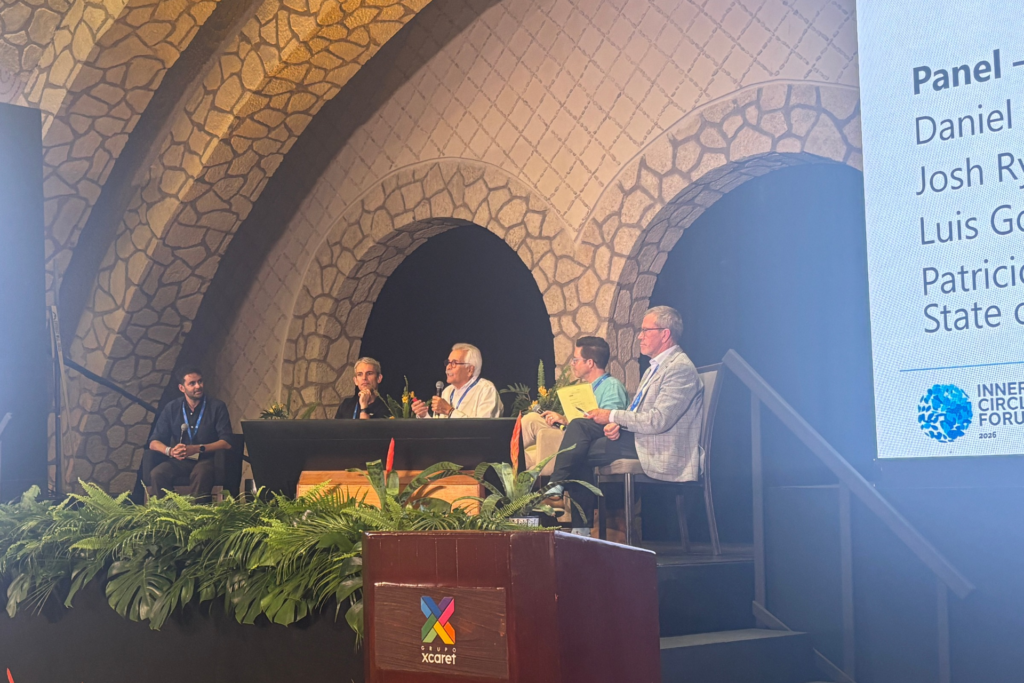
The final panel explored how culture, learning, restoration and technology can strengthen the relationship between visitors and destinations.
Luis Gonzalez, representing UNESCO Creative Communities, encouraged participants to consider the role of curiosity in shaping how people experience a place. He observed that visitors often look up when exploring a destination, noticing architecture, surroundings and details that residents may overlook in their everyday lives.
Encouraging this curiosity can help people develop a greater appreciation of local stories, skills and traditions. Through examples of creative industries, cultural tourism and place-based learning, Luis introduced the concept of ‘aprendication’, centred on protecting and appreciating what communities value.
Daniel Walsh of Reforest emphasised the value of a coordinated, strategic and directed approach to restoration projects that gives visitors and businesses meaningful ways to contribute. He demonstrated the importance of communicating impact through stories people understand and can relate to. Technical measures provide evidence, but stories about people and places help audiences connect with that evidence and motivate them to act.
Patricio Hernández Díaz, from the Ministry of Tourism of the State of Querétaro, shared insights from Sierra Gorda, where local champions hold a collective vision and framework to address the challenges they face. He highlighted that frameworks such as EarthCheck Destination Certification can provide structure and accountability, while community leadership and tangible local benefits sustain participation.
To close the panel, Joshua Ryan-Saha of the Edinburgh Futures Institute examined how artificial intelligence is reshaping the way destinations are discovered and understood. He raised questions about the accuracy, completeness and ownership of destination information as seen through an AI lens, describing it as a distorted mirror.
As travellers increasingly rely on AI to discover and evaluate destinations, there is a risk that incomplete or unrepresentative information will influence how places are perceived. This creates a growing need for destinations to curate reliable data and ensure local stories are accurately represented.
While AI presents opportunities to improve visitor management and encourage responsible travel choices, these benefits will depend on the quality and completeness of the information that supports it.
Making sustainability visible
Leopoldo Perez from Booking.com concluded the day’s presentations with evidence of the commercial value of sustainability certification.
In controlled experiments across approximately 28,000 properties between September 2025 and March 2026, Booking.com found that when sustainability certification badges were hidden, bookings declined by a statistically significant 0.25%.
For operators, the challenge is making sustainable choices easier for travellers to identify, trust and purchase. Independent certification has a role in addressing this trust gap, but operators also need accessible technical guidance and support to overcome the costs and complexity of certification.
The Booking.com experiment highlights the value of connecting industry standards, digital distribution and government support so that sustainability becomes both operationally achievable and commercially visible.
Where to from here?
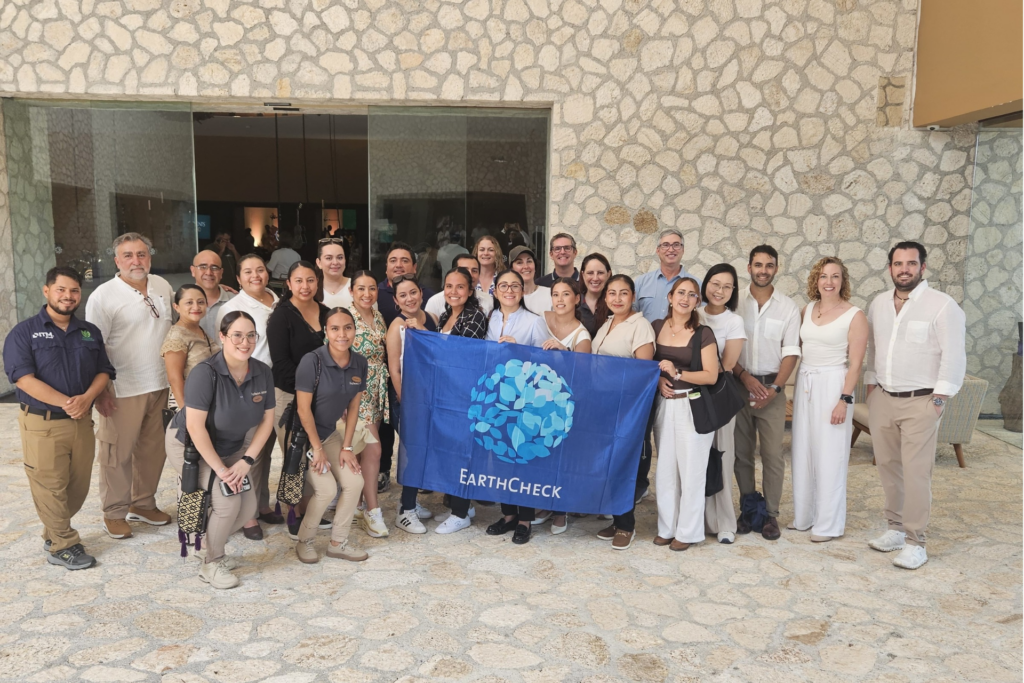
The local Mexican examples shared at Inner Circle reinforced that meaningful change is often led by people and organisations with a long-term commitment to place.
Whether through Grupo Xcaret’s approach to cultural heritage and community relationships, Vidanta’s integration of environmental protection in event management or the shared destination vision described for Sierra Gorda, the lesson was consistent: sustainability is most effective when it influences how tourism businesses operate, invest and engage with their communities.
Inner Circle 2026 pointed to four priorities:
- Put communities at the centre. Listen to residents, involve them in destination and place management and measure the benefits tourism creates locally.
- Turn influence into action. Use supply chains, purchasing decisions, operational responsibilities and partnerships to improve performance across the tourism network.
- Connect data with stories. Demonstrate progress through credible data and use storytelling connected to the people and places that give it meaning.
- Build continuity beyond the event. Turn shared interests into practical collaboration, with clear responsibilities for sustainability and timelines with measurable outcomes.
Fifteen years on, Inner Circle’s purpose hasn’t changed: to bring people together to speak openly, learn from one another and turn shared ambition into practical progress.
The opportunity now is to build on the connections made at the Forum, creating stronger businesses, healthier environments and lasting value for the communities that welcome tourism.