62% better than the Regional Leader benchmark
40% better than the Regional Leader benchmark
of EarthCheck Certification
Images by: Arthur Vialle
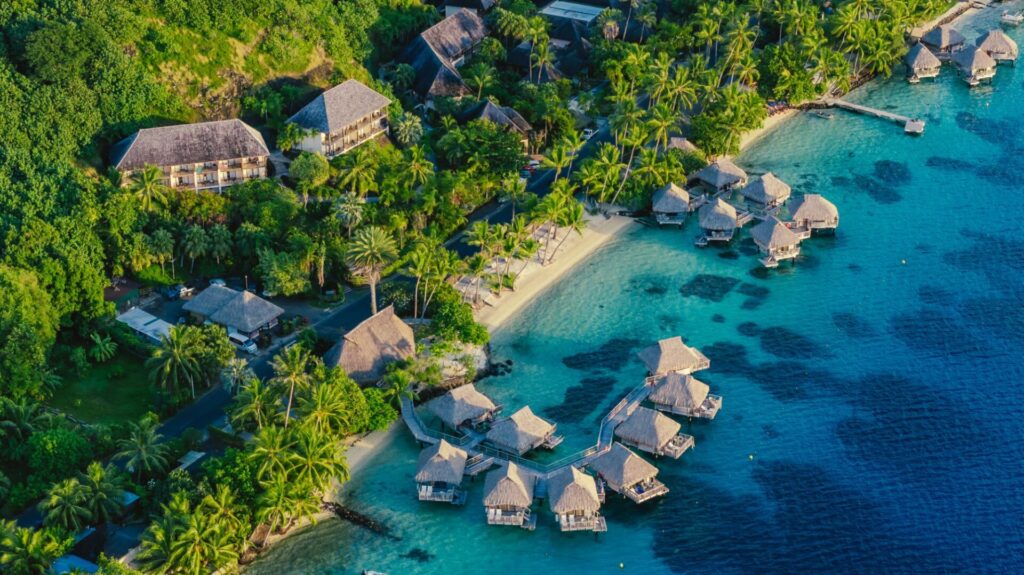
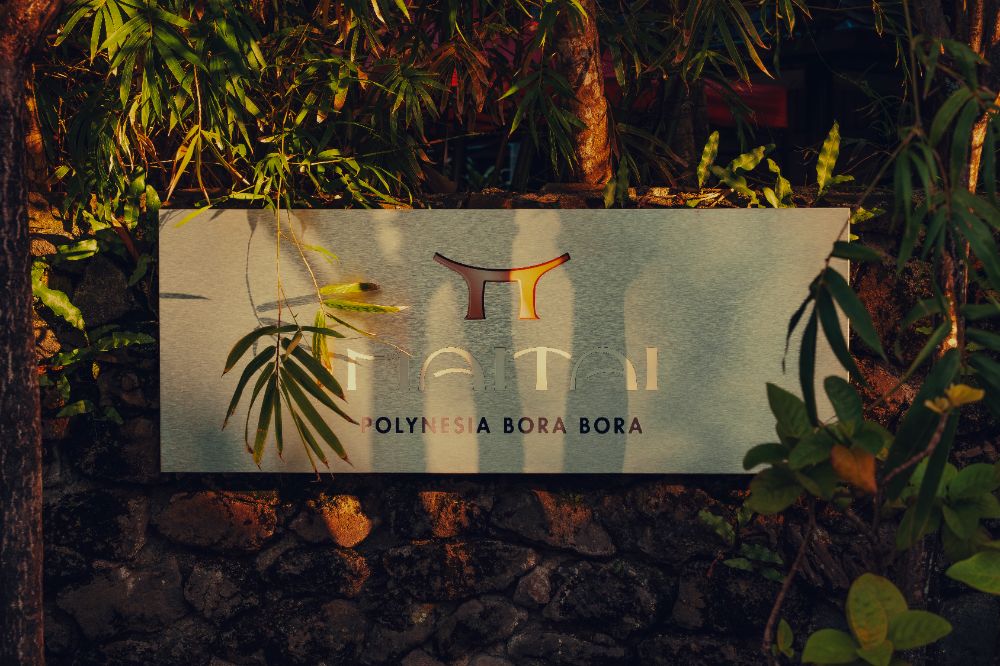
French Polynesia sits at the edge of the world’s largest ocean, surrounded by some of its most biodiverse and extraordinary marine ecosystems. Hotel Maitai Polynesia Bora Bora has spent more than a decade and a half working to protect them by measuring and improving its environmental performance, and actively restoring the coral reef on its doorstep.
In 2008, Hotel Maitai Polynesia Bora Bora joined the EarthCheck Certified program. Sixteen consecutive years of verified performance later, the hotel holds EarthCheck Master Certified status – the highest level EarthCheck awards, reserved for properties with at least 15 years of continuously verified environmental and social performance. In all that time, the property has never recorded a major non-conformance. It is the only hotel in French Polynesia to have reached this level.
“Master Certification reflects long-term, verified performance,” says Stewart Moore, Founder and CEO of EarthCheck. “What stands out here is the consistency. This is a property that has embedded sustainability into day-to-day operations and maintained it over time.”
That record is consistent across the portfolio, with sister property Hotel Maitai Rangiroa holding EarthCheck Platinum Certification for more than a decade. It’s the result of a collective commitment from staff, management and leadership, all working to protect and preserve the place they call home.
The Pacific Beachcomber Group, which manages the Maitai Hotels through its Hotel Management & Services division, had been running sustainability initiatives across its properties for years before anyone thought to give the work a name. In 2021, it got one: WE CARE.
The WE CARE program is built on three pillars: environment, colleagues and communities. Its central target is to cut greenhouse-gas emissions by 50 percent by 2030, in line with French Polynesia’s own climate ambitions.
At the Maitai Polynesia Bora Bora, this commitment translates into concrete actions every day in support of sustainable development, the wellbeing of staff and guests, and the empowerment of local communities. This approach is now fully integrated into the hotel’s identity and values.
In Bora Bora, electricity production still relies primarily on diesel, while the development of solar infrastructure depends on local authorities, with deployment planned by 2030. Although these developments are beyond its control, the Maitai Polynesia Bora Bora is taking concrete action on what it can control: optimising its energy consumption.
As part of this approach, the hotel has completed its transition to 100% LED lighting. Air conditioning units nearing the end of their lifespan are being progressively replaced with models using low-environmental-impact refrigerants. The hotel is also exploring the installation of solar-powered garden lighting, illustrating its commitment to pursuing sustainable solutions adapted to the realities of an island environment.
The numbers back up the commitment. Energy consumption runs at 87.5 megajoules per guest night, well below the EarthCheck Regional Leader benchmark of 141.1 MJ. Greenhouse gas emissions are also lower, at 11.3 kilograms of CO₂ equivalent per guest night against a Regional Leader mark of 15.9. Mobile energy emissions dropped by 25 percent in a single year.
Responsible water management is another strong focus. The hotel brought consumption down 12 percent in a single year through a combination of measures: fitting pressure reducers on the fire-sprinkler network, building a new water circuit, installing accurate meters, and putting maintenance staff on regular leak patrols.
Guest-night consumption dropped from 410 litres in 2023 to 357 in 2024, well below the Regional Leader benchmark of 597 litres. The hotel also reuses treated non-potable water supplied by the municipality for irrigating its gardens; a practical measure that extends available resources further.
There’s no single silver bullet here. The improvement came from a combination of infrastructure upgrades and the kind of day-to-day vigilance that makes a real difference over time.
Currently, 67% of the hotel’s waste is recycled. To reduce waste, toiletries in the rooms have been removed, and plastic bottled water in rooms has been replaced with water fountains and carafes. The team continues to search for a sustainable alternative to plastic food wrap, which is a significant source of waste for hotels.
On-site, a Caeterra composter processes fruit and vegetable scraps, eggshells and flowers. The hotel has invested in a compactor for cardboard, cans and plastics, and plans to acquire a machine that will allow for the complete on-site processing of food waste. Two or three times a year, the CSR and kitchen departments also organise a week-long campaign during which employees’ food waste is weighed daily, combining awareness-raising and data collection.
The amount of waste sent to landfill currently stands at 9.9 litres per guest night, just below the regional benchmark of 10.9. The margin for improvement is slim. The team would be the first to tell you there is still much work to be done.
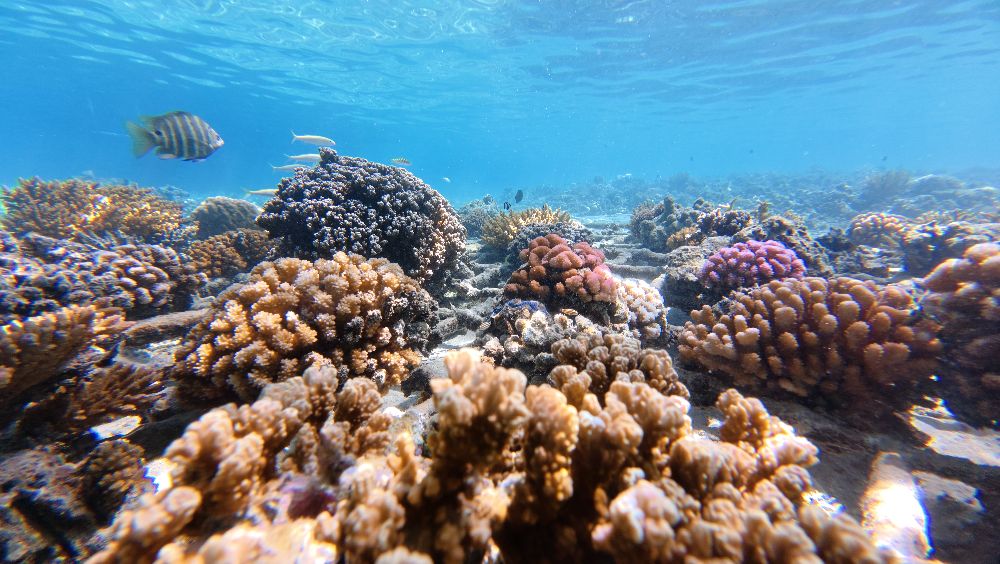
For the last decade, the hotel has been actively committed to restoring the reef located directly on the edge of its facilities.
The method: Biorock coral-restoration structures installed on the fringing reef directly in front of the property. The technique, developed by the Global Coral Reef Alliance, uses a low-voltage electrical current to promote the build-up of calcium carbonate on metal frames. Coral attaches to these structures and grows faster than it would on bare substrate. The technology is now used in more than 40 countries, from Indonesia to the Caribbean.
At the Maitai, the work is carried out in partnership with Espace Bleu, a Bora Bora–based marine-restoration company founded in 1999 by marine biologist Denis Schneider, and with CRIOBE, one of France’s foremost coral-reef research laboratories, affiliated with the CNRS and the École Pratique des Hautes Études. Between 2021 and 2025, the three partners ran a marine biodiversity survey on the hotel’s reef.
The results have been encouraging. However, in 2024, a bleaching event linked to rising ocean temperatures hit hard. Restored sections of reef showed stronger recovery than unrestored sections. Living coral colonies increased from 25 in 2024 to 37 in 2025, alongside a rise in marine life including giant clams, sea urchins, sea cucumbers and top shells. More than 120 sea urchins were recorded on restored sections in 2025, with higher numbers of juvenile fish also observed.
There are currently five to seven Biorock structures in place, with further installations planned with Espace Bleu. Guests can take part in coral-propagation workshops, helping to grow and spread new coral fragments, giving them a hands-on way to engage with the restoration work underway. It’s a memorable experience that leaves a lasting impression.

– Stewart Moore, Founder and CEO of EarthCheck
The people who work at Hotel Maitai Polynesia Bora Bora are, overwhelmingly, from French Polynesia. Ninety-five percent of the workforce is local, more than 85 percent of hires come from within the organisation, and in 2025 the hotel brought on 17 interns, 15 of whom were from the region. This isn’t the result of a diversity quota; local employment is simply built into how the hotel operates.
Employee satisfaction in 2025 came in at 78 percent. Women make up 57.5 percent of staff and 35.7 percent of management. Every employee receives CSR training annually, and anyone who wants to participate in environmental initiatives can do so year-round through an open Green Team model.
The hotel plays an active role in the local community by providing financial and in-kind support to associations, businesses and schools, notably through meals, food donations and raffle prizes. In 2025, this commitment amounted to nearly 1.3 million XPF.
As part of a collective effort to improve living conditions on the island and reduce waste, the Maitai Hotel partners with other hotels, businesses, associations and schools in Bora Bora to participate in island cleanups. Together, and with the support of over 300 volunteers, 980 kilograms of waste were collected in 2025.
The hotel invites its guests to participate in its environmental initiatives through simple everyday actions: reminders about water and electricity use, guidance on waste sorting, and information on how to respect the lagoon. Partner providers also offer presentations dedicated to marine biology.
Among these initiatives, the coral restoration workshop stands out, offering guests a hands-on and immersive experience that encourages them to take direct action.
These efforts have a real impact. Guest reviews on major booking platforms single out the coral-regeneration program and the hotel’s sustainability credentials alongside the usual mentions of views and friendly staff. People notice when a hotel actually means it.
The team’s priorities for the next three years are to push greenhouse-gas emissions lower, finish eliminating single-use plastics, and build stronger responsible-procurement partnerships with suppliers. The solar panel rollout, if it goes ahead on the municipality’s timeline, would be a significant shift in the hotel’s energy profile.
The hotel is strengthening its sustainability commitment through the professional development of its CSR manager, who has completed training in sustainable tourism. This opens the door to new guest engagement programmes and more ambitious internal targets. In parallel, the hotel is finalising a responsibility charter for its service providers, focused on biodiversity. A structured action plan guides the team through to 2030.
The hotel’s recently published CSR report provides further detail on its sustainability priorities, progress and next steps.
With sixteen consecutive years of EarthCheck certification, the Maitai Polynesia Bora Bora hotel exemplifies a continuous commitment to excellence and improvement. The results are tangible: the reef is healthier, water consumption is down, waste management is better controlled, and ties with the local community have been strengthened.
The work has been steady, and carried out day by day. This is what long-term sustainability looks like
There are more than 476 million Indigenous Peoples, found in all regions of the world, from the Arctic to the tropical forests. They make up more than 6 per cent of our global population.
In the spirit of reconciliation, EarthCheck acknowledge the Traditional Custodians of Country throughout the world and their connections to land, sea and community. We pay our respect to their Elders past and present and extend that respect to all Indigenous Peoples today.
EarthCheck acknowledges that Indigenous Peoples are guardians of the forests and biodiversity hotspots we all depend on. Research shows that lands managed by Indigenous Peoples, with secure rights, experience lower deforestation rates, store more carbon, hold more biodiversity, and benefit more people than other lands — including protected areas.
We recognise and support the United Nations Declaration on the Rights of Indigenous Peoples (UNDRIP), the most comprehensive international instrument on the rights of Indigenous Peoples. The Declaration is a positive document that maps out a path for Indigenous Peoples to be free from discrimination and secure in their identities and life choices.
EarthCheck science and products were developed by the Australian Government Sustainable Tourism Co-operative Research Centre (STCRC) over ten years. Our science is reviewed annually to ensure that it meets international standards relative to greenhouse gas protocols, responsible tourism, and certification.
EarthCheck products and services are built on the Agenda 21 principles for Sustainable Development endorsed by 182 Heads of State at the United Nations Rio De Janeiro Earth Summit in 1992 and aligned to the SDGs.
EarthCheck Certified provides a framework for organisations to achieve the desired outcomes for sustainable development as set out in the final report of the World Summit for Sustainable Development held in Johannesburg in 2002.
EarthCheck Certified complies with the Mohonk Agreement (2000), which outlines the guidelines and principles for an international sustainable tourism certification program. It is also a Recognised program of the Global Sustainable Tourism Council (GSTC).
EarthCheck Certified is a verification standard accepted by CDP. It is also an approved program of the Certification and Accreditation Administration of the People’s Republic of China (CNCA), London & Partners, the Mexican Secretary of Tourism (SECTUR) and the City of Sydney.
EarthCheck Certified is an approved program for meeting the EU Energy Directive for the Federal Office for Economic Affairs and Export Control (Bundesamt für Wirtschaft und Ausfuhrkontrolle – BAFA) in Germany and the Netherlands Enterprise Agency (Ministry of Economic Affairs and Climate Policy) in the Netherlands.
EarthCheck partners with international research organisations to maintain the currency of EarthCheck science and our benchmarking systems.
The EarthCheck brand signifies scientific excellence, better environmental, economic, and social performance, improved community interactions, and savings through more efficient use of resources. It provides recognition and promotional support to a global consumer market.